

Imagine a patient with a rare condition in Greece who waits for years to access a new therapy. This is not an exception: reimbursement of innovative treatments in Greece is slow and only a small proportion of new therapies is available. The human cost is real. Yet biopharmaceutical science is advancing rapidly: international authorities classify roughly 40% of new medicines as having high therapeutic value or being pioneering. Survival in diseases such as cancer is improving, complications and hospitalisations are decreasing, and patients’ functionality is rising. When access to innovation is timely and appropriate, patients’ quality of life improves, the health system is decongested, and society gains in productivity. These realities raise a clear question: how can Greece benefit from science-driven solutions without chronic delays?
For almost a century, Ipsen has been building a global innovation ecosystem that translates research into patient care. With a presence in more than 100 countries and €687 million invested in R&D in 2024, the company develops therapies with tangible clinical impact through an international R&D network where more than 750 scientists advance over 20 programmes, from discovery to clinical development. Our strategy rests on three pillars: Oncology, with leadership in cancers of the kidney, liver, thyroid and pancreas; Rare Diseases, with clinical answers including Primary Biliary Cholangitis and exceptionally rare genetic disorders of the liver and bone; and Neuroscience, with neurotoxin solutions for spasticity and dystonia.
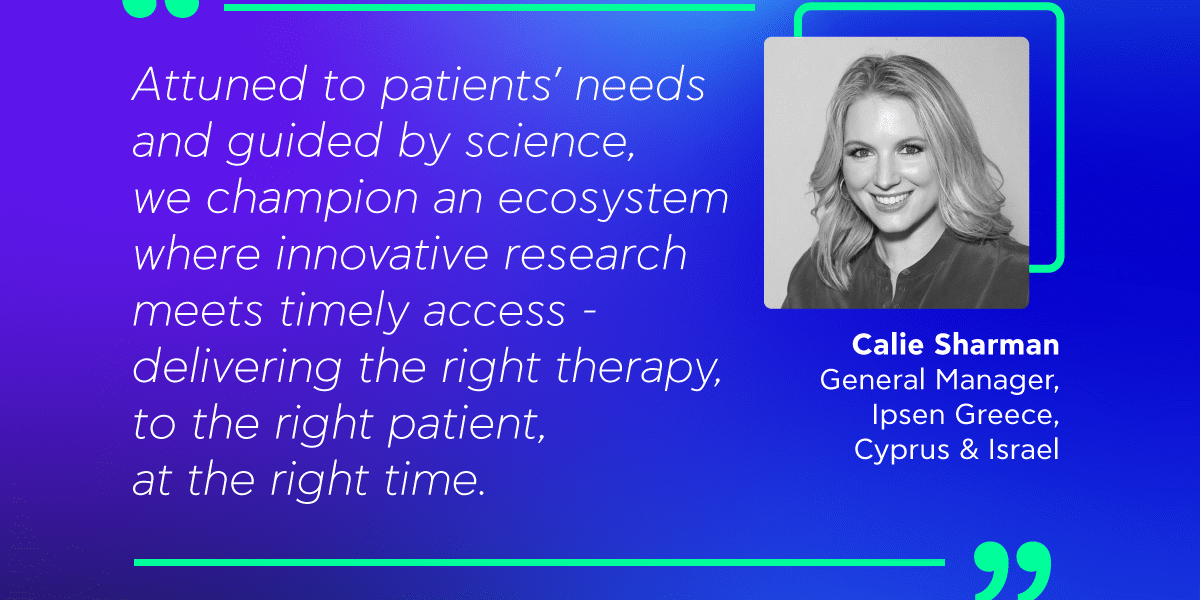
In Greece, Ipsen translates global know-how into tangible impact for patients. Alongside making advanced therapies available, we support and conduct clinical studies in public hospitals in collaboration with outstanding investigators, and we implement Patient Programmes that strengthen adherence, education and day-to-day care. With access, research and patient focus at the forefront, our vision is an ecosystem where science meets access without delay—so that the right patient in Greece, is on the right therapy, at the right time.
Innovation in Greece cannot remain on the sidelines. With public coverage effectively extending to only 2–3 out of 10 medicines administered, the result is delays, launch deferrals and loss of value for patients, the health system and the economy. The solution is concrete: a sustainable and predictable funding framework with rationalised paybacks, combined with faster and more transparent health-technology assessment and reimbursement. In addition, a meaningful offset of R&D/clinical-trial investments is needed so that innovation and access advance together within the national health system.
In this spirit, the joint positions of the PhARMA Innovation Forum (PIF) and the Voices of Innovation initiative offer a realistic roadmap for collaboration. Ipsen Greece is committed to continuing to invest, to bring innovative therapies, and to work closely with the State and the community. With stable rules and adequate funding, Greece can become a model: innovation that reaches every patient in time and contributes to an effective and sustainable health system.
Calie Sharman, General Manager, Ipsen Greece, Cyprus & Israel