

Pharma Innovation Forum at the Panhellenic Congress on Health Economics and Policy highlighted the critical role of data, evaluation, and European harmonization in modern pharmaceutical policy.
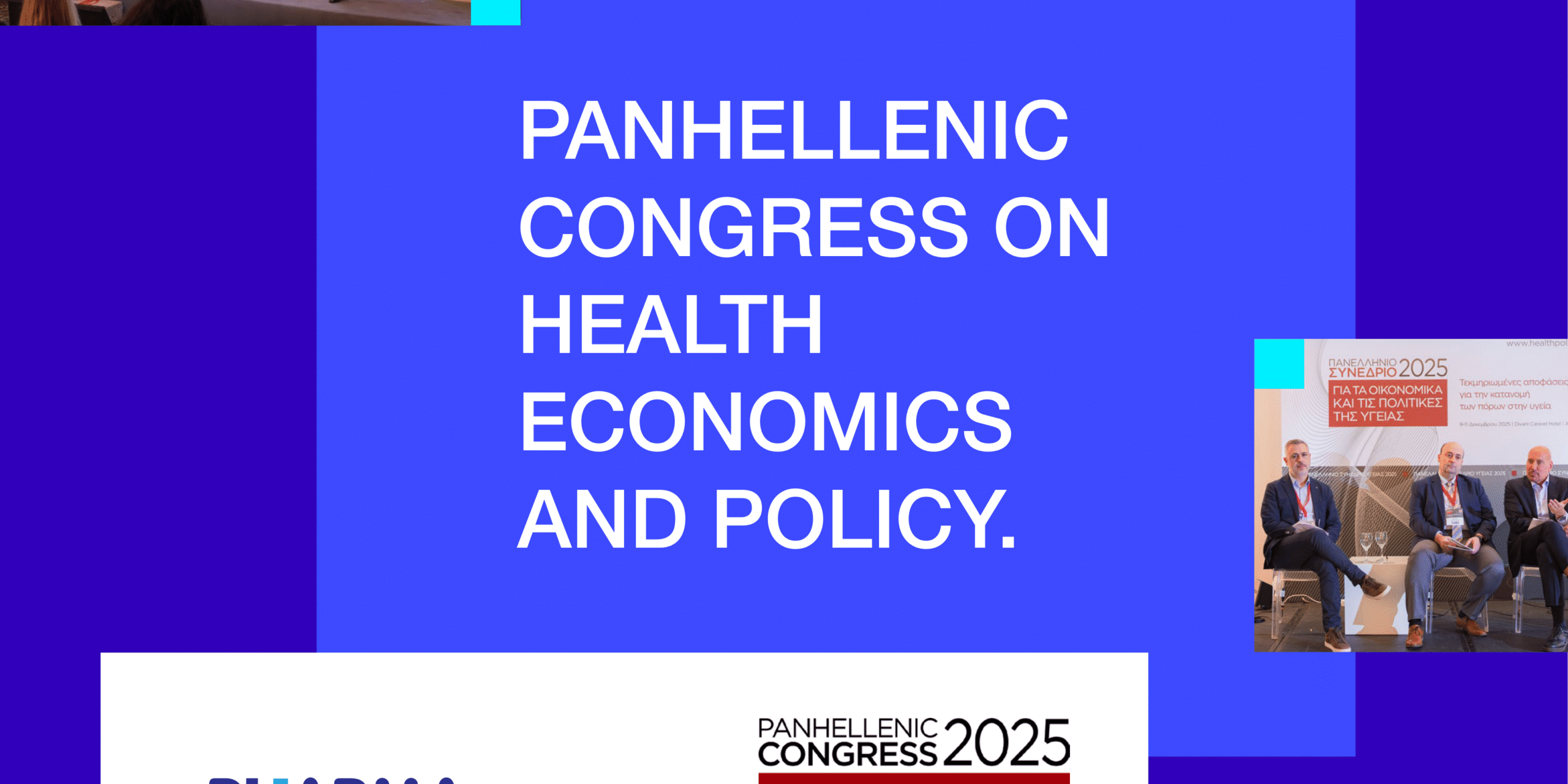
Pharma Innovation Forum (PIF) had a strong institutional presence at the Panhellenic Congress on Health Economics and Policy, contributing substantially to the public discussion on how the country can evaluate, reimburse, and ultimately utilize innovation for the benefit of patients. With a central focus on the need for evidence-based decision-making and a system that recognizes true therapeutic value, PIF highlighted the role of modern data, new methodologies, and European developments in shaping a sustainable and fair pharmaceutical policy.
The President of PIF and Managing Director of AbbVie Greece, Cyprus & Malta, Ms. Labrina Barmpetaki, participated on Wednesday, December 10, in the sessions titled “Understanding the New HTA Methodology: Valuebased Assessment of Medicines” and “Essential Evidence for a Rational Pharmaceutical Policy in Greece,” while on Thursday, December 11, the General Manager of PIF, Mr. Ioannis Kotsiopoulos, moderated the session “How Digital Transformation Can Lead to an Improved Health System,” and participated in the panel titled “Pharmacoepidemiology as a Tool for the Formulation of National Health Policy,” in which he addressed the contribution of pharmacoepidemiology to pharmaceutical policy.
In the session titled “Understanding the New HTA Methodology: Valuebased Assessment of Medicines” Ms. Barmpetaki stated:
“Pharmaceutical innovation is directly connected to the ability of science to address needs that until today remained unmet, through targeted and personalized approaches, diagnostic markers, and technologies that improve both clinical outcomes and the quality of life of patients. Despite progress, the existing evaluation framework remains horizontal and primarily oriented toward the fiscal footprint, something that does not allow for the full recognition of the added therapeutic value of new treatments. The new methodology can contribute to better organization and to a more evidence-based process, as long as it does not lead to multiple and time-consuming procedures, but instead shapes a stable, clear, and reliable framework that facilitates timely patient access to the treatments they need.”
At the roundtable titled “Essential Evidence for a Rational Pharmaceutical Policy in Greece,” Ms. Barmpetaki continued by placing value at the center:
“When a treatment proves its clinical effectiveness and demonstrably surpasses existing options, we must approach it based on the value it offers. In such a framework, innovation cannot be burdened with horizontal returns of 60% or 75%, because this cancels in practice its role and turns the industry into the main funder of the system. In no European market is such an inflexible logic applied; pricing and reimbursement are connected to evidence of effectiveness and real benefit. If we want a system that rewards progress and ensures patient access, then value – and not the horizontal clawback – must determine the rules.”
In the panel “Pharmacoepidemiology as a Tool for the Formulation of National Health Policy,” Mr. Kotsiopoulos underlined the decisive role of real-world data in shaping modern and effective health policies. He emphasized that pharmacoepidemiology is a key tool for the reliable evaluation of innovation and noted:
“We cannot design health policy with assumptions; we need to know what actually happens to patients and how treatments work in everyday life.”
He also underlined that the European framework of the European Health Data Space creates new opportunities for the safe and interoperable utilization of data, contributing both to the sustainability of health systems and to the fair access of patients to new, innovative treatments.
With the interventions of the President and the General Manager, Pharma Innovation Forum confirmed its institutional role in shaping an evaluation and reimbursement system that recognizes and rewards the value of innovation, strengthens sustainability, and places the patient at the center. PIF continues to operate as a strategic partner of the Government, promoting policies that are based on scientific progress, evidence-based decision-making, and the creation of a fair, transparent, and predictable environment for all stakeholders.