

In an era where scientific progress is accelerating at unprecedented rates, biopharmaceutical innovation is no longer simply a technological evolution. It constitutes a new pillar for health systems, with therapies that radically change the way rare diseases, cancer, hypercholesterolemia and an increasing range of chronic conditions are treated. Personalized medicine, gene interventions and pioneering molecules are shaping a therapeutic ecosystem that can overturn the course of health for the next generations.
At the same time, international competition between the USA, China and Europe is intensifying. While China increases investments in R&D and the USA remains the undisputed leader of innovation, Europe shows signs of losing momentum. The shift in this balance puts at risk the global competitiveness of the European pharmaceutical industry.
Within this new reality, the critical question is one: how will innovation be transformed into measurable value for patients and health systems?
Two key factors define the answer. First, timely access to innovative medicines. In a country like Greece, with rapid population ageing, this access is not simply a social necessity; it is a prerequisite for the sustainability of the health system The upcoming wave of innovation has the potential to increase healthy life expectancy, reduce morbidity, and free up valuable resources by limiting hospitalizations and complications associated with chronic or acute diseases.
Second, the sustainable financing of innovation. While new medicines require significant investment to develop, they deliver substantially higher clinical and societal value. They improve patients’ functionality and quality of life, enhance productivity, reduce the overall burden on healthcare systems, and generate true returns on investment. To unlock this value, modern reimbursement mechanisms are needed along with risk-sharing tools and a framework that rewards proven value and effectiveness.
The Greek reality continues to be far from this model. The delay in the evaluation and reimbursement of new medicines and the chronic underfunding significantly limit patients’ access to innovation. The maintenance of excessive clawback returns as a structural financing mechanism is not a sustainable solution. It undermines the country’s ability to attract investments, retain specialized scientific personnel and – most importantly – ensure timely access to therapeutic innovation.
Greece stands before a decisive choice: will it invest strategically in innovation, or will it watch other countries move forward faster? The second option entails loss of competitive advantages and lagging behind in quality of care.
At MSD, our commitment remains steady: we leverage the most advanced achievements of science to improve lives. Greece can become a center of excellence in clinical research and innovation, provided the appropriate conditions exist. Our presence proves this in practice: 81 clinical studies in progress – >70 of which in Oncology – offering early access to new products while strengthening the country’s scientific community. At the same time, we implement targeted awareness and prevention initiatives in critical areas such as Oncology, Vaccines, Antimicrobial Resistance, and Pulmonary Arterial Hypertension.
As an active member of the PhARMA Innovation Forum, we participate in shaping policies that promote transparency, collaboration and equitable access. The ‘’Voices of Innovation’’ initiative highlights our collective goal: for innovation to reach where it can truly make a difference – to people.
The concept of access to medicine is not theoretical. It has faces. It is about the people around us — our families, our friends, our loved ones. In modern, developed European countries, this should never be a question. Access is not a privilege; it is a fundamental right. This belief fuels our personal commitment and reinforces MSD’s dedication to ensuring that innovation is not merely discovered, but delivered so that every person, everywhere, can benefit from therapies that change lives.
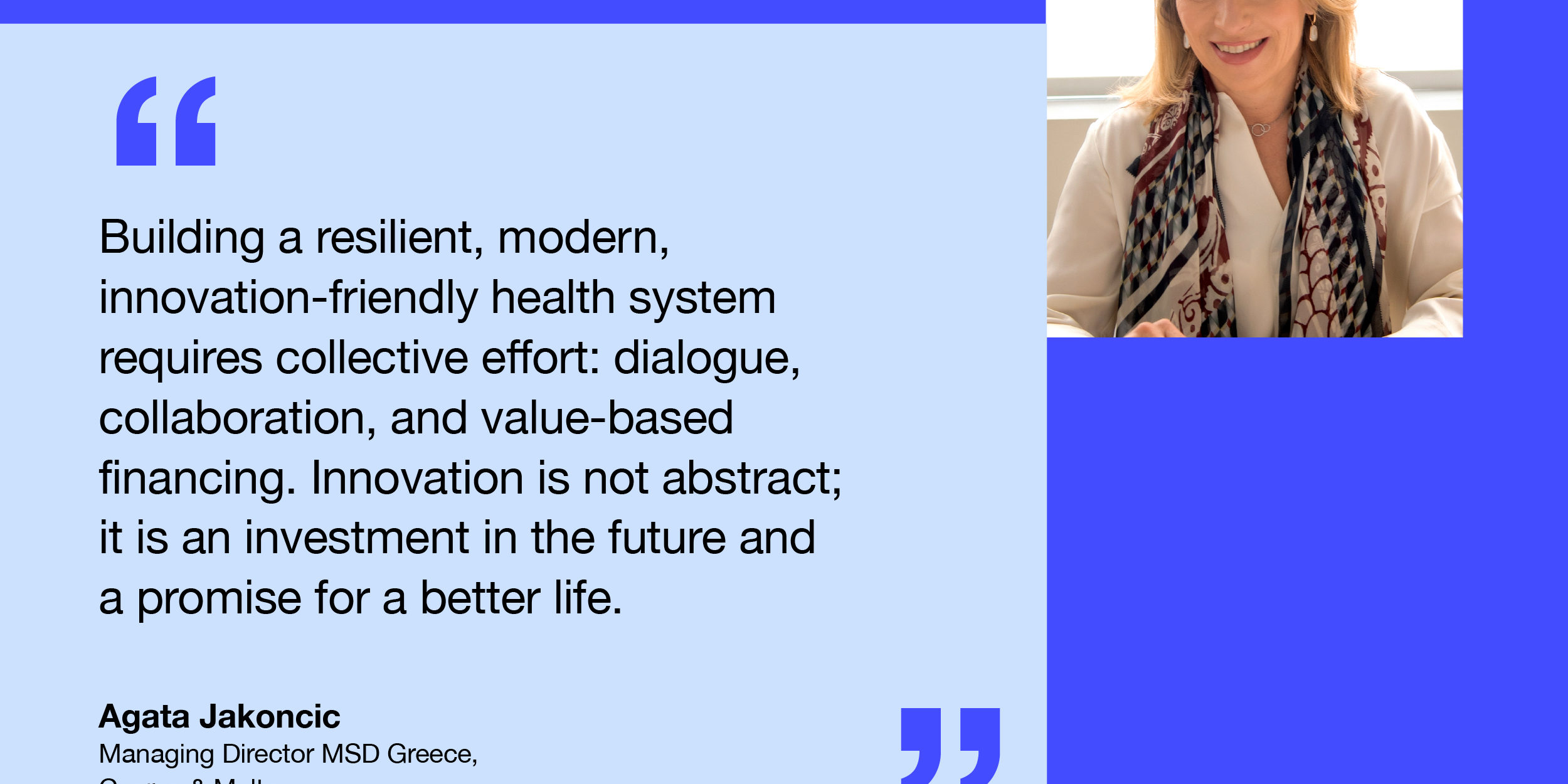
To build a health system that is resilient, modern and friendly to innovation, a collective effort is required: dialogue, collaboration and a financing framework based on value, not cost. Because innovation is not an abstract notion; it is an investment in the future and a promise for a better life.
Agata Jakoncic, Managing Director MSD Greece, Cyprus & Malta