

Pharmaceutical innovation is more than a scientific or medical achievement—it is a strategic enabler for improving health outcomes, ensuring the sustainability of national healthcare systems, and driving economic growth. In Greece, this reality is becoming increasingly clear. With a population facing growing healthcare needs, limited resources, and mounting economic pressures, the integration of innovative therapies into the healthcare system is not only a necessity but an opportunity.
Over the past decades, the development and availability of innovative medicines have dramatically improved health outcomes in Greece. Life expectancy of cancer patients increased by 10.4 months between 1995 and 2015, largely due to better access to new therapies and the strengthening of healthcare services. Beyond survival, these advances support healthier, more functional citizens, enabling them to participate actively in society and the workforce.
From an economic standpoint, innovative treatments are not just cost centers- they are cost savers. By preventing complications, minimizing hospital stays, and enhancing chronic disease management, they significantly reduce long-term healthcare expenditures. According to EFPIA data, innovation has helped save over €13 billion in healthcare costs across Europe. In Greece, this translates into a more efficient allocation of limited healthcare resources and a healthier, more productive population.
The pharmaceutical sector is also an important economic contributor. It supports thousands of high-quality jobs across a wide range of activities- from research and manufacturing to distribution and retail- and attracts domestic and foreign investment. This industry fosters a research and innovation ecosystem that can serve as a growth engine for the Greek economy.
However, this potential is at risk. Patients’ access to innovative therapies is increasingly uncertain due to pricing, reimbursement, and regulatory delays. The solution lies in creating a stable, transparent, and value-based policy framework- one that ensures timely access to treatments, supports sustainable funding, and encourages investment in research and development.
This national strategy aligns with a broader European imperative. As outlined in the Draghi Report, Europe faces an innovation gap with global competitors like the U.S. and China, especially in critical technologies like biotechnology. To remain globally competitive, the EU- and by extension Greece- must foster an environment where the biopharmaceutical industry can thrive. This means not only preserving scientific excellence but also ensuring the practical application of innovation through a predictable regulatory framework, access to capital, and public-private collaboration.
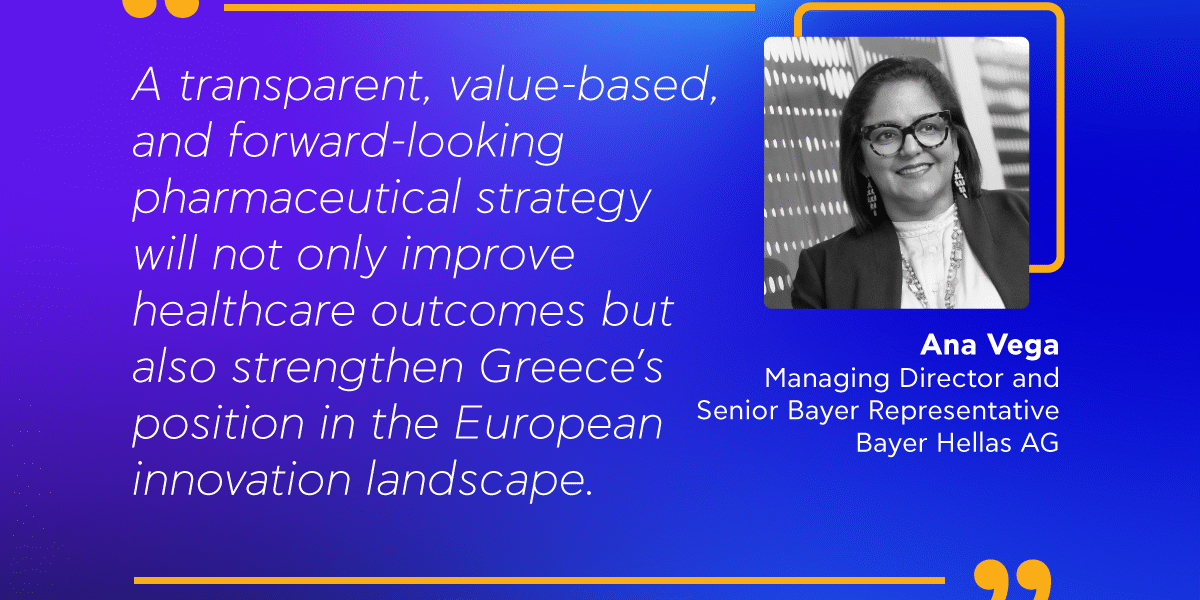
In conclusion, Greece’s ability to offer timely, innovative healthcare solutions hinges on its willingness to embrace pharmaceutical innovation as a national priority. In this context, Voices of Innovation initiative by PhARMA Innovation Forum brings together the voice of the biopharmaceutical community around critical issues such as the value of innovative treatments for patients, the use of data, the attraction of investment, and the support of highly skilled employment. Through dialogue, it promotes a strategic, sustainable, and socially fair healthcare model- one where innovation is recognized as a catalyst for transformation and resilience. The patient cannot wait. A transparent, value-based, and forward-looking pharmaceutical strategy will not only improve healthcare outcomes but also strengthen Greece’s position in the European innovation landscape.
Ana Vega, Managing Director and Senior Bayer Representative Bayer Hellas AG