

The new HTA framework takes some steps towards value-based assessment; however, further improvements are still needed to ensure timely and sustainable patient access to new therapies. These include establishing clear methodologies and procedures, as well as consulting with pharmaceutical companies throughout the assessment process.
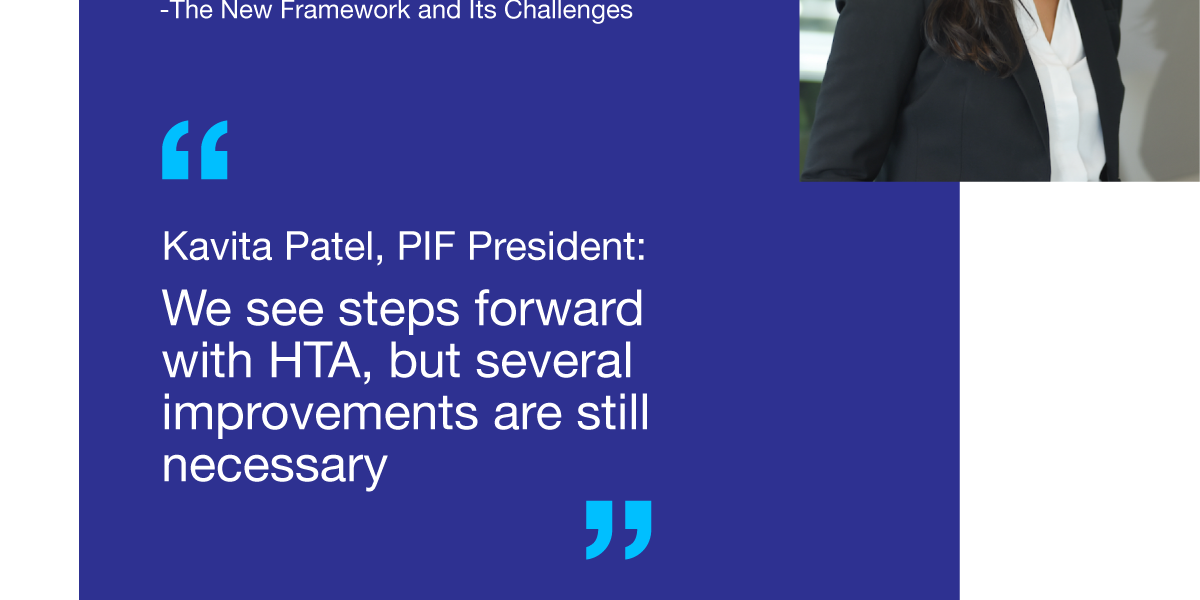
The critical role of Health Technology Assessment (HTA), the contribution of the new legislation, and Greece’s position within the evolving European HTA landscape were highlighted by Kavita Patel, President of PhARMA Innovation Forum and Managing Director of Roche Greece & Cyprus, during her participation in the panel “Greece in the European HTA Ecosystem – The New Framework and Its Challenges”, as part of the 11th HTA Conference.
Kavita Patel placed particular emphasis on the need for an effective and modern Health Technology Assessment (HTA) framework, stressing that assessments should be based on strong evidence while also offering the necessary flexibility to respond to scientific advances and support personalized treatment options that take into account patients’ different needs. She also highlighted the importance of a reimbursement system that ensures timely and sustainable patient access to the treatments they need. As she noted, the value of innovation extends beyond clinical benefit. It represents a long-term investment, with a significant impact on patients’ quality of life and the efficiency of the healthcare system, as well as on broader social and economic activity.
Ms. Patel described the new HTA bill as an opportunity to modernize the national framework and align it with European standards. However, she stressed the need to move away from an approach focused solely on containing pharmaceutical expenditure towards a system that recognizes the broader value of innovation, where reimbursement decisions are not linked to existing or future levels of mandatory rebates (clawbacks) and discounts (rebates).
In addition, Ms. Patel referred to aspects of the bill that require further attention. In particular, she focused on the assessment criteria and methodology, emphasizing the need for a clear and transparent approach to evaluating the broader value of a medicine. She also highlighted the challenges posed by the 5/11 criterion for medicines that fall outside the JCA process, calling for its complete removal, as the partial removal provided for in the bill could lead to inequalities in access across different treatments. She further reiterated that pharmaceutical companies should be involved in the consultation process during the assessment, in order to strengthen the effectiveness of the decision-making process.
In closing, Ms. Patel reaffirmed PIF’s commitment to continuing to contribute to the public dialogue and to moving forward through collaboration and concrete action.