

For every 10 innovative medicines needed by Greek patients, the Government funds fewer than 2!
The measures that the Government announced two years ago have had no effect on containing expenditure.
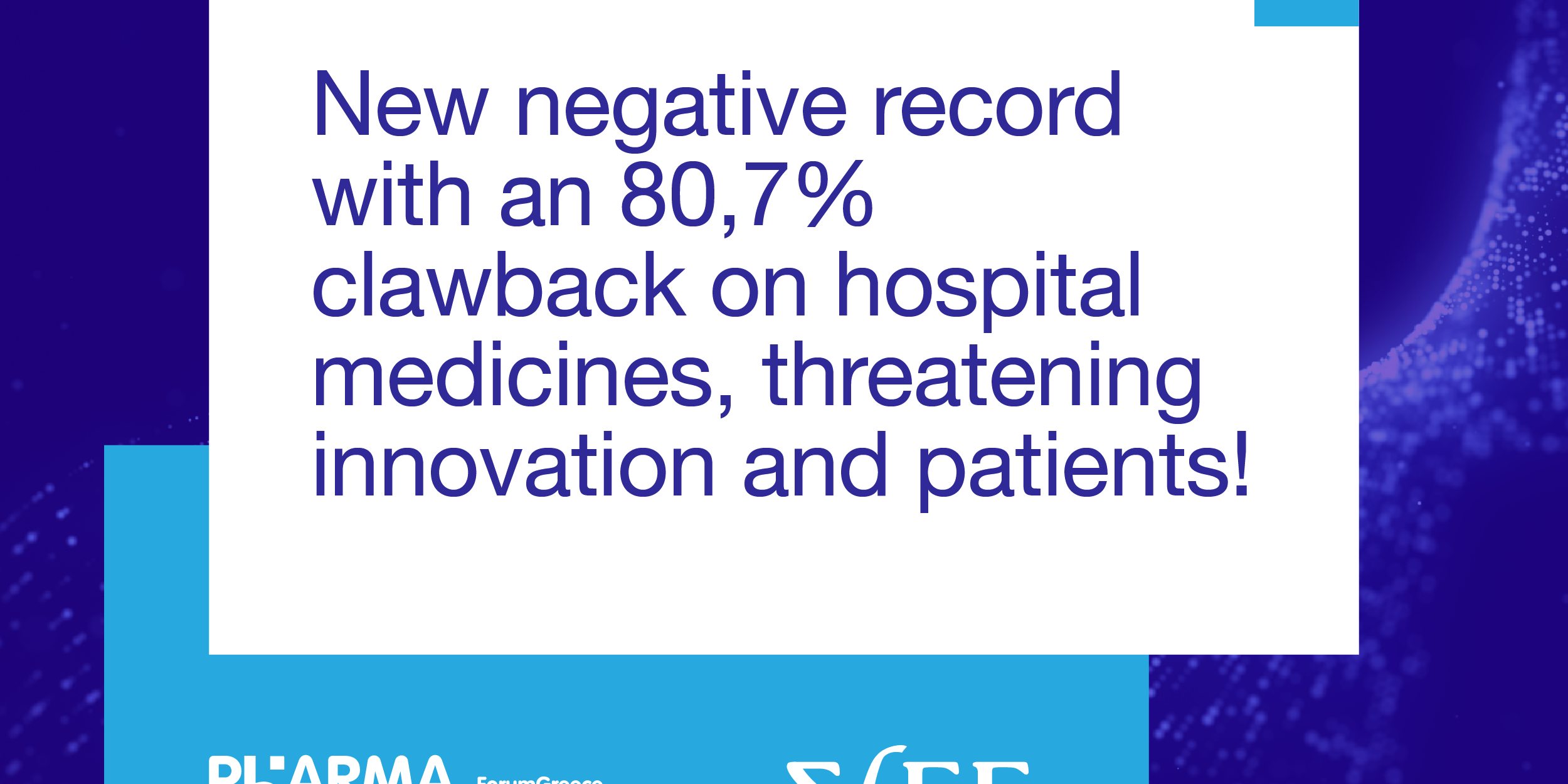
The Hellenic Association of Pharmaceutical Companies (SFEE) and PhARMA Innovation Forum (PIF) express their deep concern over the critical situation facing the hospital medicines reimbursement system in Greece. Data from the first half of 2025 reveal an alarming situation: the clawback rate for hospital medicines reached 80,7%, marking a further increase compared to the first half of 2024.
This negative development runs counter to previous government commitments to gradually reduce the clawback mechanism, commitments that had fostered expectations aligned with the country’s broader economic growth. Instead, its continued escalation sends a clear message about the urgent need for coordinated action between the state and the pharmaceutical industry to implement meaningful reforms, as the measures introduced to date have failed to deliver the expected results. It is evident that a mechanism originally introduced as an emergency measure during the years of the economic crisis – a period that Greece has now firmly left behind – must be brought down to truly sustainable levels.
This development confirms that the long-standing imbalances in the financing of hospital pharmaceutical expenditure have now evolved into a structural crisis. Recognizing these challenges, SFEE and PIF remain committed to supporting the Government in accelerating the necessary reforms and ensuring a more efficient allocation of available resources, with the aim of safeguarding patients’ access to innovative therapies while also preserving the sustainability of the companies that provide them.
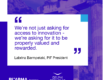
Ms. Kavita Patel, President of the Pharma Innovation Forum (PIF) and General Manager of Roche Greece & Cyprus, stated: “An 80,7% clawback rate represents a deeply concerning milestone for pharmaceutical innovation in Greece. In practical terms, it means that for every ten innovative medicines needed by Greek patients suffering from serious, chronic, or life-threatening diseases, the state funds fewer than two, shifting the vast majority of the cost burden onto the companies that invest in and provide these innovative therapies. This is happening in a country that already has some of the lowest medicine prices in Europe. The data for the first half of 2025 clearly validate the concerns that PIF had raised well in advance regarding the unsustainability of the current situation. Our concerns are now unequivocally reflected in the figures, underscoring the urgent need for immediate and meaningful interventions.”
Mr. Olympios Papadimitriou, President of SFEE and General Manager of Novo Nordisk Greece & Cyprus, stated: “The government’s unwillingness to make even the slightest commitment regarding the trajectory of pharmaceutical expenditure, even within hospitals, in an environment entirely under its control — inevitably leads to Greek patients being deprived of future therapies. At the same time, it highlights the lack of urgency with which the authorities approach the effectiveness, or lack thereof, of the measures implemented to contain expenditure. This approach is truly unmatched, not only at the European level but arguably on a global scale. Pharmaceutical companies are contributing more than the state itself to the funding of citizens’ pharmaceutical care. We call on the government to engage in an open and constructive dialogue to establish a framework that is fair, effective, and ultimately serves the best interests of patients.”
SFEE and PIF state that addressing the problem requires genuine partnership between the Government and the pharmaceutical sector. With a spirit of cooperation, we extend an open invitation to the Ministry of Health and the Ministry of Finance for an immediate institutional meeting and a substantive, honest dialogue aimed at co-shaping a sustainable, predictable, and fair pharmaceutical expenditure framework. We believe that only through joint effort can solutions be implemented that address patients’ needs and align with the capabilities of the healthcare system.