

Innovation is not simply the introduction of new medicines. It is a catalyst that improves quality of life, reduces hospitalization and disability, and enhances productivity and societal participation. For Greece’s health system- already under pressure from demographic ageing, chronic disease burdens, and constrained budgets- innovative therapies and digital tools offer a path toward sustainability. They enable more efficient resource allocation, early intervention, and better management of complex diseases.
In Greece, the pharmaceutical sector contributes €6.9 billion to GDP and supports over 119,000 jobs, demonstrating its strategic economic footprint while strengthening the country’s health resilience. At the same time, innovation remains essential to ensure access to modern therapies in a system where health expenditure has declined by nearly 20% over the last decade, despite growing demographic pressures.
Europe- and Greece- face structural barriers. EFPIA highlights that only 50% of medicines launched in the US are available in Europe, with patients waiting an average of 578 days for access to new treatments. National cost-containment measures such as clawbacks further hinder timely availability and long-term sustainability. Greece is among the most affected markets, where clawbacks consume a disproportionate share of pharmaceutical budgets, limiting investment in innovation and clinical trials — a challenge also reflected in the updated positions of the PhARMA Innovation Forum (PIF).
Crucially, supporting innovation is not a cost but an investment. Modern medicines prevent complications, reduce downstream spending, and generate long-term economic value. When combined with digital health infrastructure and data-driven care pathways, innovation can reshape the entire continuum of care.
At UCB, the mission is clear: to deliver life-changing value to people living with severe diseases. In Greece, this commitment translates into accelerating access to breakthrough therapies, advancing digital and data-driven healthcare solutions, and investing in science that serves patients through partnerships and system efficiencies. Through coordinated cross-functional collaboration, strong regulatory navigation, and evidence-driven negotiations, record-speed reimbursement has been achieved for new medicines, outperforming EFPIA benchmarks and enabling rapid access to high-value therapies addressing unmet medical needs.
At the same time, efforts are directed toward supporting a responsible, data-driven healthcare environment, championing ethically governed data use, interoperability, and digital pathways that enhance patient monitoring and optimize clinical decision-making. A strong immunology and neurology portfolio reflects sustained investment in targeted research and biologics that significantly improve patient quality of life, while participation in clinical trials and real-world evidence initiatives strengthens the country’s research footprint. Recognizing that 20–40% of global health spending is estimated to be wasted, emphasis is also placed on eliminating inefficiencies and supporting structural reforms that can unlock reinvestment into high-value care, in alignment with EFPIA’s call for modernized HTA processes, coherent regulatory frameworks, and sustainable funding for innovation.
The expanding portfolio in Greece includes scientifically advanced therapies, clinical trials, and real-world evidence projects, complemented by patient support programs, digital adherence tools, and multi-stakeholder collaborations that amplify impact across the care pathway.
The ongoing dialogue promoted by the PhARMA Innovation Forum and the ‘’Voices of Innovation’’ initiative is essential to ensuring that scientific progress translates into timely patient access in Greece. By advocating for a stable policy environment, realistic financing conditions, and the systematic use of health data, the initiative highlights what is required for innovation to remain viable and sustainable within the healthcare system. This direction is consistent with UCB’s commitment to supporting reforms that strengthen access, reinforce research activity, and improve long-term system efficiency.
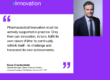
Ioannis Kokkotos, Country Lead & Head of Immunology (South Eastern Europe), UCB